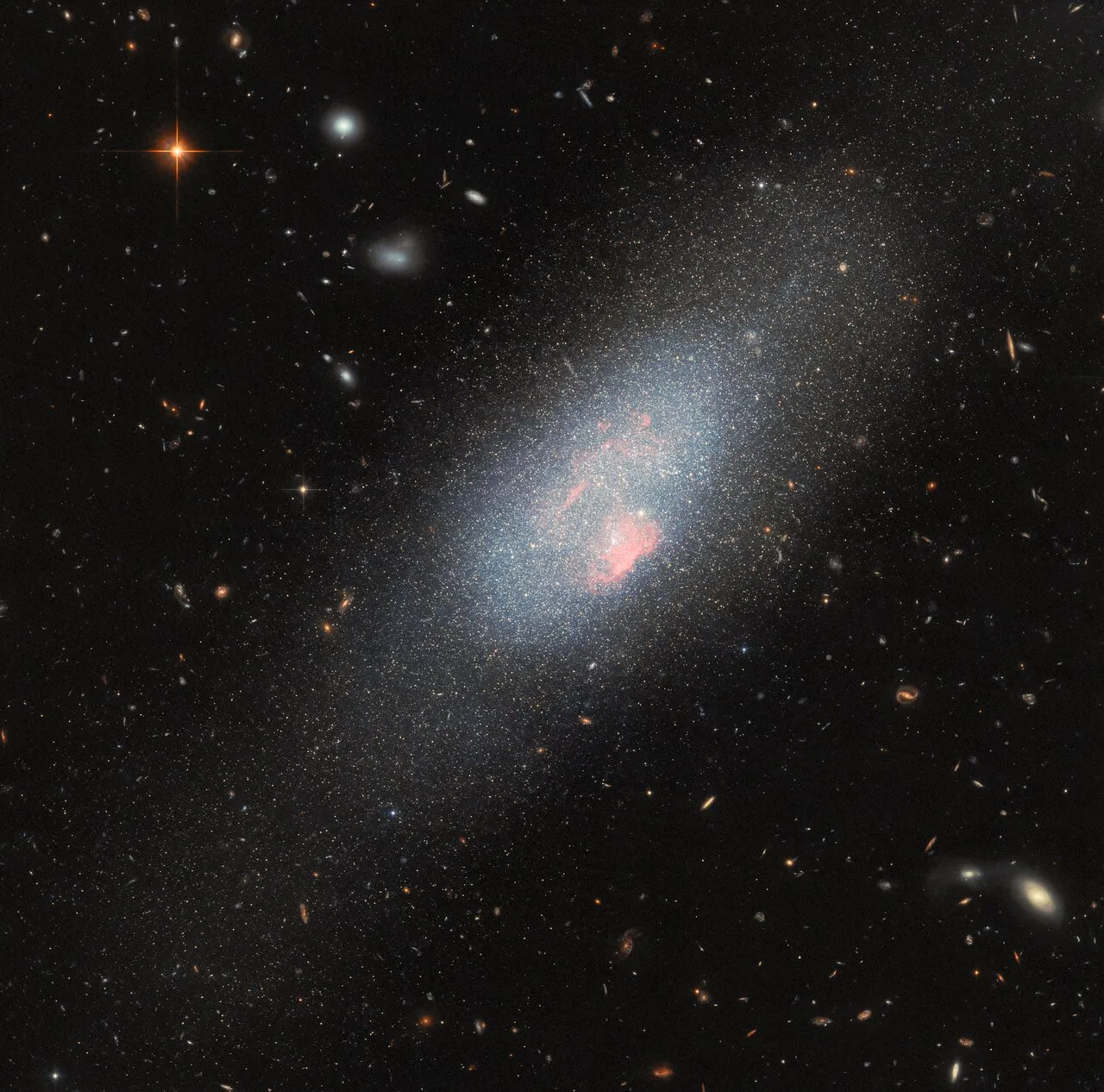
آخرین تصویر هفته ESA/Hubble، کهکشانی فوقالعاده درخشان به نام Markarian 178 (Mrk 178) را نشان میدهد. این کهکشان مملو از ستارگان جوان و داغ بیشماری است. اما جالبتر از آن، وجود دستهای نادر از ستارگان به نام ستارگان Wolf-Rayet است.
Markarian 178 (Mrk 178) یک کهکشان کوتوله است. این بدان معناست که بسیار کوچکتر از کهکشان راه شیری ما است. Mrk 178 در فاصله ۱۳ میلیون سال نوری از ما در صورت فلکی خرس بزرگ (دب اکبر) قرار دارد. مانند سایر کهکشانهای Markarian، Mrk 178 هنگام مشاهده در نور ماوراء بنفش به طرز چشمگیری روشن است.
در این رصد هابل، Mrk 178 به صورت یک کهکشان فشرده آبی در یک زمینه سیاه دیده میشود. رنگ آبی نشان میدهد که ستارگان جوان داغ بیشماری در کهکشان وجود دارد. اما کهکشان کاملاً آبی نیست. ظاهری قرمز رنگ وجود دارد که بیشتر به سمت لبه کهکشان متمرکز است. این ظاهر قرمز رنگ به دلیل وجود دستهای نادر از ستارگان به نام ستارگان Wolf-Rayet شکل گرفته است.
ستارگان ولف-رایه، ستارگانی بسیار عظیم و بسیار داغ هستند که تنها چند میلیون سال عمر میکنند. این ستارگان در مرحله پایانی زندگی خود، قبل از انفجار به صورت ابرنواختر و تبدیل شدن به یک ستاره نوترونی یا سیاهچاله، قرار دارند. این ستارگان لایههای بیرونی خود را با استفاده از بادهای ستارهای قوی به فضا پرتاب میکنند. انتشار قوی از ستارگان ولف-رایه، گاز هیدروژن اطراف را یونیزه میکند و نور قرمز مشاهده شده را تولید میکند.
This glittering blue galaxy and subject of today’s ESA/Hubble Picture of the Week is a blue compact dwarf galaxy called Markarian 178 (Mrk 178). This galaxy, which is substantially smaller than our own Milky Way, lies 13 million light-years away in the constellation Ursa Major (The Great Bear). Mrk 178 is one of more than 1500 Markarian galaxies. These galaxies get their name from the Armenian astrophysicist Benjamin Markarian, who compiled a list of galaxies that were surprisingly bright in ultraviolet light. While the bulk of the galaxy is blue owing to an abundance of young, hot stars with little dust shrouding them, Mrk 178 gets a red hue from a collection of massive stars, which are especially concentrated in the brightest, reddish region near the galaxy’s edge. This azure cloud is home to a large number of rare objects called Wolf–Rayet stars. Wolf–Rayet stars are massive stars that are casting off their atmospheres through powerful winds. Because Mrk 178 contains so many Wolf–Rayet stars, the bright emission lines from these stars’ hot stellar winds are etched upon the galaxy’s spectrum. Particularly ionised hydrogen and oxygen appear as a red colour to Mrk 178 in this photo, observed using some of Hubble’s specialised light filters. Massive stars enter the Wolf–Rayet phase just before they collapse into black holes or neutron stars. Because Wolf–Rayet stars last for only a few million years, researchers know that something must have triggered a recent burst of star formation in Mrk 178. At first glance, it’s not clear what could be the cause — Mrk 178 doesn’t seem to have any close galactic neighbours that could have stirred up its gas to form new stars. Instead, researchers suspect that a gas cloud crashed into Mrk 178, or its gas may have been disturbed as the galaxy swims through the intergalactic medium, lighting up this tiny galaxy with a ripple of bright new stars. [Image Description: A pale blue dwarf galaxy seen on the black
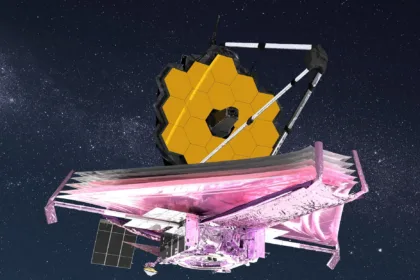
این واقعیت که ستارگان ولف-رایه تنها چند میلیون سال عمر میکنند، به این معنی است که چیزی باید باعث انفجار اخیر تشکیل ستاره شده باشد. تصاویر عمیقتر از تلسکوپ دوچشمی بزرگ، ویژگیهای جزر و مدی ضعیفی را در اطراف کهکشان نشان داد. این ویژگیهای جزر و مدی نشان میدهد که یک کهکشان ماهوارهای کوچکتر در گذشته ممکن است باعث تشکیل ستاره اخیر در کهکشان مرک ۱۷۸ شده باشد.
مشاهدات آینده هابل از این کهکشان به ستارهشناسان کمک خواهد کرد تا چگونگی دقیق تشکیل ستاره در مرک ۱۷۸ را مطالعه کنند.